
Have you ever looked at a bottle of vodka or rum and wondered, “Can this get any stronger?” You’re not alone. Whether you’re a curious home bartender, a college student preparing for a themed party, or just someone who wants to understand liquor labels better, the question which alcohol has the highest percentage is fascinating—and surprisingly complex.
The short answer? The strongest commercially available alcohol is Everclear (95% ABV / 190 proof). But that’s just the beginning. In this guide, we’ll explore the champions of high-proof spirits, how they’re made, why people drink them (or shouldn’t), and what happens when alcohol approaches its theoretical maximum. By the end, you’ll not only know which alcohol has the highest percentage—you’ll understand the science, safety, and surprising uses behind these potent liquids.
Let’s dive in.
What Does “Highest Percentage” Actually Mean?
Before we crown a winner, let’s clarify the terms. Alcohol by volume (ABV) measures how much ethanol (pure alcohol) is in a drink compared to the total liquid volume. For example, a typical beer has 5% ABV, wine around 12–14%, and standard vodka 40% ABV (80 proof).
Proof is simply double the ABV in the US system. So 40% ABV = 80 proof. The higher the ABV, the closer the liquid is to pure ethanol.
But here’s the catch: pure ethanol (100% alcohol) is not drinkable. It’s hygroscopic (absorbs water from the air instantly) and would severely burn your mouth, throat, and stomach. Even at 95% ABV, you’re entering dangerous territory.
So when asking which alcohol has the highest percentage that is meant for human consumption, we’re looking at spirits specifically distilled and bottled for drinking (even if only in tiny amounts).
The Undisputed Champion: Everclear (95% ABV / 190 Proof)
If you’ve ever been to a party where someone brought a clear, unassuming bottle with a warning label, you’ve met Everclear. Produced by Luxco (now MGP Ingredients), Everclear is a grain alcohol that clocks in at 95% ABV in most states where it’s legal. In some places, due to regulations, a lower-proof version (60% or 75.5% ABV) is sold instead.
Why is Everclear so strong?
It’s distilled multiple times to remove almost all water and impurities. The result is a neutral, flavorless, colorless spirit that’s essentially legal rocket fuel. Because it has no taste, it’s popular for making homemade liqueurs, extracts, and infused spirits. But drinking it straight? Extremely dangerous and not recommended.
Where is it legal?
Everclear at 190 proof is banned in many US states including California, Florida, New York, and Ohio. Always check local laws.
The Runner-Ups: Other High-Percentage Alcohols
While Everclear holds the title for grain alcohol, other spirits come close. Let’s compare:
| Spirit | ABV | Proof | Notes |
|---|---|---|---|
| Everclear (grain alcohol) | 95% | 190 | Neutral, flavorless. Not for shots. |
| Spirytus Rektyfikowany (Polish rectified spirit) | 95% | 190 | Similar to Everclear; often used in homemade nalewka (fruit liqueurs). |
| Bruichladdich X4+1 (Scotch whisky) | 92% | 184 | Quadruple-distilled single malt. Extremely rare. |
| Balkan 176 Vodka | 88% | 176 | Bulgarian vodka; marketed as “world’s strongest vodka.” |
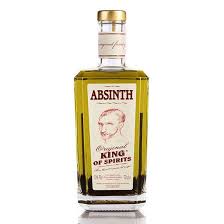
| Hapsburg Gold Absinthe | 89.9% | 179.8 | High-proof absinthe; usually diluted before drinking. |
| Stroh 80 (Austrian rum) | 80% | 160 | Spiced rum; often used in baking or flambéing. |
So when someone asks which alcohol has the highest percentage, the technical answer is a tie between Everclear and Spirytus at 95% ABV. But there’s a twist: some limited-edition products have claimed 96% ABV, though they’re not widely available or stable (ethanol and water form an azeotrope at about 95.6%, making higher concentrations nearly impossible via standard distillation).
Why Can’t Alcohol Be 100% ABV? The Science Limit
You might wonder: if distillers can make 95%, why not 100%? The answer is chemistry. Ethanol and water form an azeotrope—a mixture that boils at a constant temperature and composition. No matter how many times you distill a water-ethanol mix, you cannot exceed ~95.6% ABV using traditional methods. To go higher, you’d need chemical drying agents (like molecular sieves), which aren’t used for beverage alcohol.
So the theoretical maximum for drinkable alcohol is 95.6%. In reality, even 95% is rare because it absorbs moisture from the air, dropping to 94–94.5% once opened.
Is Higher Percentage Always Better? Absolutely Not.
Just because which alcohol has the highest percentage has a clear answer doesn’t mean you should seek it out. High-proof spirits are dangerous if misused. Here’s why:
Health Risks of Drinking High-Proof Alcohol Straight
- Throat and stomach burns – Ethanol is a solvent. At 95%, it strips moisture from tissues, causing chemical burns.
- Alcohol poisoning – A single shot of Everclear equals about 2.5 shots of regular vodka. Your liver cannot process that quickly.
- Respiratory arrest – High concentrations depress the central nervous system faster, leading to stopped breathing.
- Blindness or death – Unlike methanol (which causes blindness), ethanol in extreme amounts causes fatal overdose. Just 4–5 shots of Everclear in an hour can kill an average adult.
Legal and Social Consequences
Many bars refuse to serve 190-proof alcohol straight. Some countries have banned it entirely. If you’re hosting a party, serving high-proof alcohol without dilution is irresponsible.
The Right Way to Use High-Percentage Alcohol
So why does 95% ABV alcohol exist if it’s so dangerous? Because it’s incredibly useful—just not for drinking neat.
1. Homemade Liqueurs and Infusions
Want to make limoncello, coffee liqueur, or fruit schnapps at home? Start with Everclear. Its neutral taste lets the flavors shine, and its high alcohol content extracts oils and flavors faster than vodka. Dilute it with simple syrup or juice to your desired strength.
Example recipe:
- 1 cup Everclear (95%)
- Zest of 5 organic lemons
- 1 cup sugar + 1 cup water (simple syrup)
Combine zest and Everclear in a jar. Steep for 1 week. Strain, add cooled simple syrup, and bottle. Result: 35–40% ABV limoncello.
2. Natural Extracts (Vanilla, Mint, etc.)
Store-bought vanilla extract is typically 35% ABV. To make your own, use high-proof alcohol because it extracts vanillin from beans more efficiently. Plus, the alcohol preserves the extract indefinitely.
3. Cleaning and Sanitizing (Non-Food Uses)
At 70% ABV, ethanol kills most bacteria and viruses. At 95%, it’s even more effective but evaporates too quickly for some uses. Many people keep Everclear in their first-aid kit to sterilize tools or clean electronics (carefully—it can damage some plastics).
4. Flambé and Culinary Tricks
High-proof alcohol burns with a clean, blue flame. Use it for dramatic flambé dishes (bananas Foster, crêpes Suzette) or to flame Christmas puddings. Safety tip: Always remove the pan from heat before adding high-proof alcohol, and never pour directly from a bottle near an open flame.
A Brief History of High-Proof Alcohol
The quest to answer which alcohol has the highest percentage goes back centuries. Medieval alchemists tried to create “aqua vitae” (water of life) with increasing potency. By the 18th century, rum and whisky reached 50–60% ABV. But the modern era of grain alcohol began with Prohibition in the US (1920–1933). People needed strong, discreet alcohol that could be diluted with mixers. Everclear was born from that demand.
In Eastern Europe, rectified spirits like Spirytus have been produced for even longer—traditionally used in herbal tinctures and medicinal preparations, not recreational drinking.
Comparing the Strongest Alcohols Around the World
Let’s take a global tour:
- USA: Everclear (95% ABV) – king of neutral grain spirits.
- Poland: Spirytus Rektyfikowany (95% ABV) – often labeled “rectified spirit.”
- Scotland: Bruichladdich X4+1 (92% ABV) – a quadruple-distilled whisky, more of a novelty than a daily drinker.
- Bulgaria: Balkan 176 (88% ABV) – smooth for its proof due to multiple filtrations.
- Austria: Stroh 80 (80% ABV) – used more in baking than drinking.
- France/Germany: Absinthe (up to 89.9%) – traditionally diluted with ice water and sugar.
Notice a pattern? Most of these are not consumed straight. They’re ingredients, novelty items, or cultural specialties meant for dilution.
Frequently Asked Questions (FAQ)
1. Which alcohol has the highest percentage that is safe to drink straight?
No high-proof alcohol above 60% ABV is truly “safe” to drink straight in any significant quantity. If you insist on sipping something strong, choose a 50–60% ABV cask-strength whisky or barrel-proof rum. These have complex flavors and are meant to be enjoyed in small sips (0.5 oz or less). Everclear at 95% is never safe to drink undiluted.
2. Can you die from drinking high-percentage alcohol?
Yes. Alcohol poisoning is a real risk. Drinking 4–5 shots of 95% ABV alcohol within an hour can be fatal for an average-sized adult. Symptoms include vomiting, confusion, hypothermia, irregular breathing, and coma. Always call emergency services if someone passes out after drinking high-proof spirits.
3. Is there any alcohol stronger than Everclear?
Not for beverage use. Some industrial-grade ethanol reaches 99.9% ABV, but it contains denaturants (poisonous additives) to prevent human consumption. You should never drink laboratory or fuel ethanol. So for drinkable alcohol, Everclear and Spirytus share the top spot at 95% ABV.
4. Why do some countries ban high-percentage alcohol?
Governments ban or restrict high-ABV spirits to reduce alcohol poisoning, accidents, and violence. For example, Canada restricts sales of 95% ABV alcohol, and many US states cap it at 75.5% (151 proof). These laws save lives by making the most dangerous products harder to access.
5. Can I use high-percentage alcohol to make hand sanitizer?
Yes, but with caution. The WHO recommends 80% ABV (160 proof) for effective hand sanitizer. If you have 95% ABV alcohol, dilute it with aloe vera gel or distilled water to reach 70–80% ABV. Using it straight at 95% can dry and crack your skin, actually increasing infection risk.
Tips for Handling High-Proof Alcohol Safely
If you decide to buy a bottle of 95% ABV spirit, follow these rules:
- Never drink it straight. Always dilute to at least 50% ABV before consuming.
- Label and store carefully. Keep it away from regular liquor bottles to avoid accidental shots.
- Use a measuring tool. Don’t free-pour; use a jigger or graduated cylinder.
- Keep away from open flames. Ethanol vapors are highly flammable. No candles, cigarettes, or gas stoves nearby.
- Lock it up if you have kids or pets. A small amount can cause severe poisoning in children or animals.
- Know the signs of overdose. Slurred speech, vomiting, slow breathing, blue lips—call 911 immediately.
Final Verdict: So Which Alcohol Has the Highest Percentage?
Let’s wrap it up clearly.
If you ask which alcohol has the highest percentage among legally sold, human-grade spirits, the answer is Everclear and Spirytus Rektyfikowany, both at 95% ABV (190 proof). No standard beverage alcohol exceeds this due to the azeotrope limit.
But here’s the more important takeaway: highest percentage does not mean best. For cocktails, sipping, or social drinking, a 40% ABV whiskey or 50% ABV cask-strength rum offers far more flavor, safety, and enjoyment. High-proof spirits are tools, not trophies. Use them wisely—diluted, in recipes, or for cleaning—and they’re incredibly useful. Abuse them, and you risk serious harm.
Now you’re armed with the facts. Whether you’re impressing friends with trivia, making your own vanilla extract, or just satisfying curiosity, you know exactly which alcohol has the highest percentage—and why that bottle comes with a warning label.
Drink responsibly, dilute properly, and stay curious.

Leave a Reply