
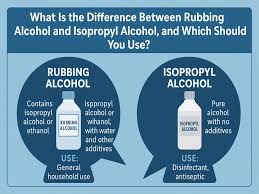
You’ve probably got a bottle or two tucked away in your medicine cabinet. One says “isopropyl alcohol.” The other says “rubbing alcohol.” They look similar, they smell similar, and they both sting like crazy when you put them on a cut.
But here’s the million-dollar question: is isopropyl alcohol the same as rubbing alcohol?
If you’ve ever stood in the pharmacy aisle staring at both bottles, confused about which one to grab for disinfecting a wound or cleaning your glasses, you’re not alone. The short answer is sort of, but not exactly. And understanding the difference matters—especially when it comes to your health and safety.
In this guide, we’ll break down everything you need to know. No confusing chemistry jargon. No fluff. Just clear, practical answers to help you choose the right alcohol for the right job.
What Exactly Is Isopropyl Alcohol?
Let’s start with the basics. Isopropyl alcohol (also called isopropanol or 2-propanol) is a clear, colorless, flammable chemical compound. It’s a type of alcohol that’s widely used as a solvent, a cleaner, and a disinfectant.
Chemically speaking, it has three carbon atoms, eight hydrogen atoms, and one oxygen atom. But you don’t need to remember that. What you do need to know is that isopropyl alcohol is the main active ingredient in most store-bought rubbing alcohol.
You’ll typically find it sold in two common strengths:
- 70% isopropyl alcohol – the most popular concentration for disinfecting
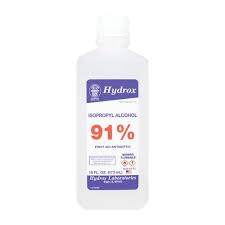
- 91% or 99% isopropyl alcohol – stronger but actually less effective for killing germs on skin
Why? Because water plays a crucial role. At 70% concentration, the water content helps the alcohol penetrate cell walls more slowly, giving it more time to kill bacteria and viruses. Higher concentrations evaporate too quickly, which can actually reduce their germ-killing power.
Common uses for pure isopropyl alcohol:
- Disinfecting medical tools (like thermometers and tweezers)
- Cleaning electronics (circuit boards, phone screens)
- Removing sticky residue from glass or metal
- Sanitizing surfaces in labs or cleanrooms
What Is Rubbing Alcohol? (It’s Not What You Think)
Here’s where things get interesting. “Rubbing alcohol” isn’t a single chemical. It’s actually a product name—a term used to describe a solution meant for external use on human skin.
In the United States, the FDA defines rubbing alcohol as a specific type of formula. Historically, rubbing alcohol was made from denatured ethanol (drinking alcohol with toxic additives). But today, most rubbing alcohol sold in drugstores is actually made from isopropyl alcohol.
That’s right: most modern rubbing alcohol is simply isopropyl alcohol with added water and sometimes other ingredients.
However, there’s a catch. Some rubbing alcohol products are still made from ethyl alcohol (ethanol) rather than isopropyl alcohol. These are often labeled as “ethyl rubbing alcohol” or “denatured alcohol rubbing compound.”
So when someone asks is isopropyl alcohol the same as rubbing alcohol, the technically accurate answer is: Often yes, but not always.
Typical ingredients in a bottle of rubbing alcohol:
- 70% isopropyl alcohol (or ethyl alcohol)
- 30% purified water
- Optional: bitterants (to discourage drinking), fragrances, or moisturizers
Key Differences at a Glance
Let’s put this side by side so you can see the distinction clearly.
| Feature | Isopropyl Alcohol | Rubbing Alcohol |
|---|---|---|
| Chemical identity | A single compound (C3H8O) | A product name, often containing isopropyl alcohol |
| Typical concentration | Sold as 70%, 91%, or 99% | Usually 70% (sometimes 50% or 91%) |
| Additives | None (pure chemical) | May contain bitterants, oils, or fragrances |
| Primary use | Industrial cleaning, disinfecting surfaces, electronics | First aid, skin disinfection, massage therapy |
| Cost | Slightly cheaper in pure form | Slightly more due to packaging and additives |
| Ingestion risk | Highly toxic | Also toxic, but bitterants make it taste worse |
Can You Use Them Interchangeably?
This is the practical question most people really care about.
For first aid: Yes, you can usually use 70% isopropyl alcohol in place of rubbing alcohol. In fact, most drugstore “rubbing alcohol” is exactly that. Just check the label. If it says “70% isopropyl alcohol,” you’re good to go.
For cleaning surfaces: Both work fine. Isopropyl alcohol (especially 91% or 99%) actually works better for cleaning glass, electronics, and removing sticky residue because it evaporates faster and leaves less water behind.
For massages (historical use): Rubbing alcohol was originally named because people “rubbed” it on their skin for muscle aches. Modern isopropyl alcohol works similarly, but it can be more drying. Some people prefer rubbing alcohol with added aloe or glycerin for this purpose.
What you should NOT do:
- Don’t use either on deep wounds or burns (they damage tissue and delay healing)
- Don’t use either near open flames (both are highly flammable)
- Don’t ever drink either one (both are poisonous)
Pro tip: If you need to disinfect a cut, soap and water are actually better than any alcohol. Alcohol kills germs but also kills healthy skin cells. Save the alcohol for cleaning around wounds or sanitizing tools.
Real-Life Use Cases: When to Grab Which Bottle
Let’s walk through some everyday scenarios so you know exactly what to do.
Scenario 1: You cut your finger while chopping vegetables.
Use: Mild soap and cool water.
Skip the alcohol. Seriously. Alcohol will sting and slow healing. If you must disinfect, use a povidone-iodine solution or hydrogen peroxide instead.
Scenario 2: You need to clean your computer keyboard.
Use: 91% or 99% isopropyl alcohol (pure).
Why: It evaporates almost instantly, so no moisture seeps into the electronics. Rubbing alcohol with added oils or fragrances could leave residue.
Scenario 3: You want to sterilize a pair of tweezers.
Use: Either 70% isopropyl alcohol or rubbing alcohol.
How: Soak for 5 minutes, then let air dry. The water in the 70% solution actually helps kill bacteria more effectively than higher concentrations.
Scenario 4: Your child has a fever, and you want to cool them down (old-school method).
Do not do this. Never apply any type of alcohol to a child’s skin for fever. It can be absorbed and cause alcohol poisoning. Use a cool compress or acetaminophen as directed by your doctor.
Scenario 5: You need to remove a price sticker from a glass jar.
Use: 91% isopropyl alcohol.
Why: The high concentration dissolves adhesives quickly without leaving a greasy residue. Rubbing alcohol with added moisturizers might leave a film.
Why Concentration Matters More Than You Think
One of the biggest mistakes people make is thinking “higher percentage equals better.” That’s not true for disinfection.
- 70% isopropyl alcohol – Best for killing bacteria, fungi, and viruses on skin and surfaces. The water content slows evaporation, allowing more contact time.
- 91% isopropyl alcohol – Better for cleaning electronics, removing oils, and dissolving adhesives. Less effective for germ killing because it evaporates too fast.
- 99% isopropyl alcohol – Used in labs and manufacturing. Too harsh for skin. Great for cleaning delicate optics or removing thermal paste from computer CPUs.
So when you’re asking is isopropyl alcohol the same as rubbing alcohol, remember that rubbing alcohol is almost always the 70% version. If you buy pure 99% isopropyl alcohol, it’s not technically “rubbing alcohol” because it lacks the water content and often the bitterants required by FDA guidelines.
Safety First: What You Absolutely Need to Know
Both isopropyl alcohol and rubbing alcohol are dangerous if used incorrectly. Here are the non-negotiable rules.
Never, ever drink either one.
Even a small amount (a few tablespoons) of isopropyl alcohol can cause severe poisoning, including:
- Dizziness and vomiting
- Slowed breathing
- Internal bleeding
- Coma or death
Rubbing alcohol often contains bitterants to make it taste horrible, but that doesn’t make it safe. If someone swallows either type, call Poison Control immediately (1-800-222-1222 in the US).
Keep away from children and pets.
Both are toxic if ingested or inhaled in large amounts. Store them up high, preferably in a locked cabinet.
Ventilation is key.
Using large amounts in a small, unventilated room can cause headaches, dizziness, or nausea. Open a window or use near a fan.
Flammable doesn’t mean “play with fire.”
Isopropyl alcohol has a very low flash point. Don’t use it near candles, gas stoves, or any open flame. And never smoke while handling it.
Frequently Asked Questions (FAQ)
1. Is isopropyl alcohol the same as rubbing alcohol for cleaning wounds?
No—and here’s why. While many rubbing alcohols are made from isopropyl alcohol, neither is actually recommended for cleaning deep wounds. Both damage healthy tissue and slow healing. Use soap and water or a saline solution instead. For intact skin (like before an injection), either is fine if it’s 70% concentration.
2. Can I use isopropyl alcohol instead of rubbing alcohol to clean my phone?
Yes, but be careful. Apple and Samsung recommend using a 70% isopropyl alcohol wipe (or rubbing alcohol wipe) on their screens. Avoid higher concentrations like 91% or 99% because they can damage the oleophobic (oil-repelling) coating. Also, never pour liquid directly on your phone—dampen a microfiber cloth instead.
3. Why does rubbing alcohol sometimes smell different than pure isopropyl alcohol?
Great question. Rubbing alcohol often contains denaturants (bitter, foul-smelling additives) to discourage people from drinking it. Some brands also add fragrances or wintergreen oil. Pure isopropyl alcohol has a sharp, clean smell. If your rubbing alcohol smells like mint or has a chemical “perfume” note, that’s the additive.
4. Which one kills germs better: isopropyl alcohol or rubbing alcohol?
If both are 70% concentration, they kill germs equally well because they’re chemically the same. The difference is in the additives. Pure 70% isopropyl alcohol is ideal. Some rubbing alcohols contain moisturizers or aloe, which can slightly reduce germ-killing effectiveness. For maximum disinfection, choose plain 70% isopropyl alcohol.
How to Read Labels Like a Pro
The confusion about whether is isopropyl alcohol the same as rubbing alcohol disappears once you learn to read the fine print.
Look for the “Active Ingredient” section on the bottle.
- If it says: Active Ingredient: Isopropyl Alcohol 70% – Then yes, it’s both.
- If it says: Active Ingredient: Ethyl Alcohol 70% – Then no, it’s not isopropyl alcohol. It’s ethanol-based rubbing alcohol.
- If it says: Isopropyl Alcohol 91% – This is not standard rubbing alcohol. It’s a stronger solution meant for industrial or electronic use.
Also check for “Inactive Ingredients.” If you see glycerin, aloe, or fragrance, you’re holding a skin-care product, not a pure disinfectant.
Final Verdict: So, Are They the Same or Not?
Let’s land the plane.
If you’re standing in a drugstore holding a bottle labeled “rubbing alcohol” and one labeled “isopropyl alcohol,” here’s the truth:
In most cases, they are the same thing. Both are typically 70% isopropyl alcohol with water. The main difference is that “rubbing alcohol” is a consumer product name, while “isopropyl alcohol” is a chemical name.
However, exceptions exist. Some rubbing alcohols use ethyl alcohol instead. And some bottles of pure isopropyl alcohol come in higher concentrations (91% or 99%) that are not intended for first aid.
So the most accurate answer to the question is isopropyl alcohol the same as rubbing alcohol is this:
Yes, when both are 70% isopropyl alcohol solutions. No, when rubbing alcohol contains ethyl alcohol or when isopropyl alcohol is sold at higher concentrations without water.
Practical Takeaways (Read This If You’re In a Hurry)
- For first aid: Use 70% isopropyl alcohol or rubbing alcohol (check the label to confirm concentration).
- For cleaning electronics: Use 91% or 99% isopropyl alcohol (pure, no additives).
- For removing stickers: Use 91% isopropyl alcohol.
- For massages or skin soothing: Look for rubbing alcohol with added aloe or glycerin.
- Never drink either one. Never use on deep wounds. Never use near flames.
Final Thoughts
The next time you’re at the store, don’t let the labels confuse you. Flip the bottle over, find the active ingredient, and check the concentration. That tiny label tells you everything you need to know.
Now you can confidently answer when someone asks you is isopropyl alcohol the same as rubbing alcohol. You’ll know it’s a trick question—because the answer is “usually, but always check the fine print.”
Stay safe, stay informed, and keep a bottle of 70% isopropyl alcohol in your home. It’s one of the most useful, affordable tools you can own—whether you call it rubbing alcohol or not.


Leave a Reply