
You’ve just left a lively dinner party. You had two glasses of red wine, maybe a cocktail, and now you’re worried about that morning meeting. Or worse, you need to drive in a few hours. The question buzzing in your head is simple: how long does alcohol stay on your breath?
It’s a fair concern. Nobody wants to be “that person” who smells like last night’s party during a 9 AM presentation. And if you’re facing a traffic stop, the stakes are much higher.
The short answer? Alcohol can remain on your breath for 12 to 24 hours after your last drink, depending on several factors. But the full story is more interesting—and more useful—than a simple number.
Let’s break down the science, the myths, and the practical tips so you can understand exactly what’s happening inside your body.
What Actually Causes Alcohol Breath?
Before we dive into timing, let’s clear up a common misunderstanding. Many people think the smell comes from alcohol sitting in your stomach or mouth. That’s only half true.
When you drink alcohol, about 20% is absorbed directly through your stomach lining. The other 80% moves into your small intestine. From there, it enters your bloodstream. Your liver works hard to break most of it down—about 90% of the alcohol you consume.
But here’s the key: your body eliminates the remaining 10% unchanged through your urine, sweat, and breath.
That’s right. The alcohol you exhale hasn’t been processed yet. It diffuses from your blood into the tiny air sacs in your lungs (called alveoli). Every time you breathe out, you release a small amount of pure alcohol vapor. That’s what a breathalyzer detects. That’s also what your coworker smells when you lean in to talk.
So the real question—how long does alcohol stay on your breath—is really asking: how long does alcohol stay in your blood?
How Long Does Alcohol Stay on Your Breath? The Honest Timeline
Let’s get specific. On average, your body processes alcohol at a rate of 0.015 grams per deciliter (g/dL) per hour. That’s roughly one standard drink per hour.
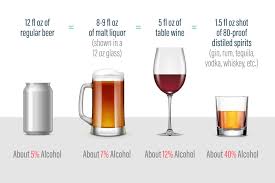
A standard drink equals:
- 12 ounces of beer (5% alcohol)
- 5 ounces of wine (12% alcohol)
- 1.5 ounces of distilled spirits (40% alcohol)
But that’s just the metabolic rate. The actual duration on your breath depends heavily on your peak Blood Alcohol Concentration (BAC).
Here’s a realistic timeline based on different drinking scenarios:
After One Standard Drink
- 0–1 hour: Alcohol is detectable on your breath within 15 minutes of finishing your drink. Peak breath alcohol concentration happens around 30–60 minutes after consumption.
- 1–3 hours: The smell is noticeable. You’ll likely fail a breathalyzer if tested.
- 3–5 hours: Breath alcohol drops significantly. Most people will register zero on a breathalyzer after 3 hours from a single drink.
- 5+ hours: No detectable alcohol on breath for a healthy adult.
After Three to Four Drinks (Typical Happy Hour)
- 0–2 hours: Strong alcohol odor. Breathalyzer readings likely over the legal limit (0.08% BAC in most US states).
- 2–6 hours: Breath alcohol remains detectable. You may still fail a test.
- 6–10 hours: Odor fades for many people, but sensitive tests can still pick up trace amounts.
- 10–14 hours: Most people register zero. However, heavy individuals or those with slower metabolism may still show positive results.
- 24 hours: Virtually undetectable for everyone, regardless of body type.
After Heavy Drinking (Six or More Drinks)
- 0–8 hours: Very strong odor. You are legally impaired and will fail any breath test.
- 8–16 hours: Moderate to strong smell. Morning breath will be particularly noticeable.
- 16–24 hours: Odor becomes faint. Some people still register low levels on professional breathalyzers.
- 24–36 hours: No detectable alcohol for most. But in extreme cases (very high BAC), traces can linger up to 48 hours.
So to directly answer how long does alcohol stay on your breath in real-world terms: plan for 12 to 24 hours after your last drink to be completely safe. If you had a single beer, you’re likely clear in 3–5 hours. If you drank heavily until 2 AM, don’t expect to be clean until the following evening.
7 Factors That Change the Answer for You
The timeline above is an average. Your personal number could be much shorter or longer. Here’s why.
1. Your Body Weight and Composition
Alcohol is water-soluble. It doesn’t dissolve in fat. So a person with more muscle mass and body water will have a lower BAC than someone with higher body fat, even after drinking the same amount. More water = more dilution = shorter breath detection time.
2. Your Sex
Biological females typically have less of the enzyme alcohol dehydrogenase in their stomachs. They also have a higher percentage of body fat and lower total body water. The result? Alcohol stays in their blood—and on their breath—longer than in males of the same weight.
3. Your Liver Health
Your liver does the heavy lifting. If you have fatty liver disease, hepatitis, or any condition that slows liver function, your processing rate drops below the average 0.015 per hour. That means alcohol lingers on your breath for many extra hours.
4. How Fast You Drank
Downing three shots in 20 minutes produces a much higher peak BAC than sipping three beers over three hours. Higher peak = longer detection time. Your liver can’t speed up just because you drank fast.
5. Food in Your Stomach
Drinking on an empty stomach is a fast track to high BAC. Food—especially fatty foods—slows gastric emptying. That means alcohol enters your bloodstream more slowly, reducing the peak concentration. Result: shorter breath detection time.
6. Your Age
After age 25, your metabolism naturally slows. Older adults also have less total body water. So a 60-year-old will retain alcohol on their breath significantly longer than a 25-year-old after drinking the same amount.
7. Medications and Health Conditions
Certain medications (like acetaminophen, antidepressants, and some antibiotics) compete with alcohol for liver enzymes. Diabetes, hypothyroidism, and kidney disease also alter elimination rates.
Can You Speed Up the Process? (Spoiler: No)
Let me save you money and disappointment. Nothing speeds up how long alcohol stays on your breath except time.
I’ve seen the myths: drinking coffee, taking a cold shower, exercising, eating mints, chewing gum, using mouthwash. None of them work. Here’s why:
- Coffee makes you more alert but doesn’t lower your BAC. You’re still impaired; you just feel more awake.
- Cold showers cause shock, not metabolism.
- Exercise might make you sweat out tiny amounts of alcohol, but we’re talking less than 1% of what’s in your system. It won’t change a breathalyzer reading.
- Mouthwash, gum, mints, or brushing your teeth only mask the odor temporarily. They don’t remove alcohol from your lungs or blood. In fact, some mouthwashes contain alcohol and could make you fail a test.
The only thing that works is waiting. Your liver processes alcohol at a fixed rate. No hack, pill, or home remedy changes that biological fact.
Real-Life Scenarios: What Would You Do?
Scenario 1: The Morning After
You had four beers at a party. Your last drink was at midnight. You need to drive to work at 8 AM. That’s 8 hours later.
Using the 0.015 per hour rule, you’ve eliminated about 0.12% BAC. If your peak was 0.08% (just at the legal limit), you might be close to zero. But if you’re smaller, female, or drank stronger beer, your peak could have been 0.10% or higher. At 8 hours, you could still be at 0.02–0.04%. That’s below the legal limit but still detectable on your breath. And you might still feel “off.”
Verdict: Wait until noon to drive. Use a rideshare or public transit in the morning.
Scenario 2: The Lunch Wine
You have one glass of wine with lunch at 1 PM. You have a client meeting at 4 PM. By 4 PM, three hours have passed. You’re almost certainly clear. No smell, no failed test. You’re fine.
Scenario 3: The Binge Night
Friday night. Seven drinks between 9 PM and 2 AM. You wake up Saturday at 9 AM feeling terrible. That’s only 7 hours after your last drink. Your BAC is likely still above 0.08%. You will fail a breathalyzer. Your breath will smell strongly of alcohol. Don’t drive until at least 6 PM Saturday—and even then, test yourself first if you have a personal breathalyzer.
Breathalyzer vs. Human Nose: What’s the Difference?
Here’s something most articles don’t tell you. A police breathalyzer can detect alcohol at much lower levels than a human nose.
- Human nose notices alcohol on breath when BAC is roughly 0.04% or higher. Some people with sensitive smell can detect it at 0.02%.
- Consumer breathalyzers (the ones you buy online) typically detect from 0.01% upward.
- Police-grade breathalyzers detect as low as 0.001%.
So when you ask how long does alcohol stay on your breath, remember: “on your breath” means different things to different detectors. Your boss might not smell anything after 6 hours, but a traffic cop’s device might still register alcohol after 12 hours.
How to Test Yourself (Without Buying Expensive Gear)
You don’t need a $200 breathalyzer to get a rough idea. Try these low-cost methods:
- The hand test: Lick the back of your hand. Wait 5 seconds for the saliva to dry. Smell it. If you smell alcohol, your breath will too.
- The wrist test: Rub your inner wrist (where your watch sits) against your mouth. Wait 10 seconds. Smell the wrist.
- The straw test: Breathe out through a clean plastic straw onto a mirror or glass. Condensation forms. Smell the condensation.
None of these are foolproof, but they give you a quick reality check before you walk into a sensitive situation.
Frequently Asked Questions (FAQ)
1. How long does alcohol stay on your breath after one beer?
After one standard 12-ounce beer, alcohol is detectable on your breath for about 3 to 5 hours. The strongest odor occurs in the first hour. After 5 hours, most people show zero on a breathalyzer.
2. Can mouthwash or brushing teeth remove alcohol breath?
No. Mouthwash only masks the smell temporarily. Alcohol comes from your lungs, not your mouth. Some mouthwashes contain alcohol themselves and could actually increase a breathalyzer reading. Stick to alcohol-free mouthwash if you’re concerned.
3. Does eating food after drinking help eliminate alcohol breath faster?
No—but it can prevent it from getting worse. Food eaten before or during drinking slows alcohol absorption. Food eaten after you’re already drunk does nothing to speed elimination. Once alcohol is in your blood, only time removes it.
4. Will a breathalyzer detect alcohol after 12 hours?
It depends on how much you drank. After 12 hours:
- 1–2 drinks: Very unlikely to detect.
- 3–4 drinks: Possible but unlikely for most people.
- 5+ drinks: Yes, a police-grade breathalyzer will likely detect residual alcohol. You may still be legally impaired.
5. Why do some people smell like alcohol the next day even after one drink?
That’s usually not the alcohol itself. It’s your body breaking down alcohol into acetaldehyde, a toxic byproduct. Acetaldehyde has a sharp, fruity odor that can linger even after the alcohol is gone. Some people also have a genetic condition that slows acetaldehyde breakdown, causing “next day” smell.
6. Can you fail a breathalyzer without drinking?
Yes, rarely. Certain medical conditions (like auto-brewery syndrome, where gut bacteria produce alcohol) and some diabetes complications can create false positives. But for most people, a positive test means you consumed alcohol.
Strong Conclusion: What You Need to Remember
Let’s bring it all home. The honest answer to how long does alcohol stay on your breath is between 12 and 24 hours for most drinking episodes, with light drinking (1–2 drinks) clearing in 3–6 hours.
Here’s your cheat sheet:
- One drink: 3–5 hours on breath
- Three to four drinks: 6–12 hours
- Heavy drinking (6+ drinks): 12–24 hours, sometimes up to 48
Nothing speeds this up. Not coffee. Not a shower. Not mouthwash. Only time.
If you need to drive, pass a workplace test, or simply avoid embarrassment, give yourself a generous buffer. When in doubt, wait an extra two hours. Or invest in a personal breathalyzer (they cost as little as $30) so you know for sure.
Your body processes alcohol at its own pace. Respect that pace, and you’ll never be caught off guard again.
Bottom line: Plan ahead. Drink responsibly. And remember—if you can still smell it, so can everyone else.


Leave a Reply