
You’ve just left a dinner party. You had two glasses of wine over two hours. You feel fine—buzzed, maybe, but not drunk. Then you see the flashing blue lights in your rearview mirror. Your heart pounds. One question screams in your head: Am I over the limit?
You’re not alone. Millions of drivers ask themselves the same thing every weekend. The problem is, whats the legal limit of alcohol isn’t just one number. It changes based on where you live, what you drive, and even how old you are.
In this guide, we’ll ditch the legal jargon. You’ll learn the exact BAC (Blood Alcohol Concentration) numbers that separate a safe drive from a DUI. We’ll cover real-world examples, tips to stay safe, and answer the questions your friends can’t agree on. By the end, you’ll know the law better than most police officers.
Let’s pour one out for confusion—and replace it with clarity.
The Short Answer: The Magic Number “0.08”
In all 50 US states, the District of Columbia, and most of Canada, whats the legal limit of alcohol for non-commercial drivers over 21 is 0.08% BAC.
What does that mean in plain English?
- 0.08% means 0.08 grams of alcohol per 100 milliliters of blood.
- At this level, most people have slower reaction times, reduced coordination, and poorer judgment.
Think of 0.08% as the “bright red line.” Cross it while driving, and you’re legally impaired—even if you feel fine. A first offense can cost you $10,000+ in fines, legal fees, and increased insurance over five years.
But here’s the catch: You can be arrested well below 0.08% if an officer decides you’re driving unsafely. More on that in a minute.
Who the 0.08% Limit Applies To (And Who It Doesn’t)
Not everyone plays by the same rules. The legal limit drops dramatically for three specific groups:
1. Commercial Drivers (Truckers, Uber/Lyft, Bus Drivers)
If you hold a CDL (Commercial Driver’s License), whats the legal limit of alcohol for you is 0.04% BAC.
- That’s half the standard limit.
- One beer in an hour could put a 180-lb male at 0.04%.
- The penalties are brutal: 1-year license suspension for a first offense, lifetime for a second.
2. Drivers Under 21 (Zero Tolerance)
All 50 states have Zero Tolerance laws. For anyone under 21, the legal limit is 0.00% to 0.02%, depending on the state.
- In most states, any detectable alcohol (0.01% or 0.02%) means automatic license suspension.
- Example: California’s “Not a Drop” law suspends your license for 1 year at 0.01% BAC.
3. Boaters and Pilots
- Boating: In many states, operating a boat has the same 0.08% limit as driving a car.
- Flying: The FAA sets the limit for pilots at 0.04% , with an 8-hour “bottle to throttle” rule.
So before you ask “whats the legal limit of alcohol,” ask yourself: What am I operating, and how old am I?
How Many Drinks Does It Take to Reach 0.08%?
This is the million-dollar question. The honest answer? It depends.
Your BAC depends on:
- Your weight (heavier people have more blood to dilute alcohol)
- Your sex (women typically have less body water and reach higher BACs faster)
- Food in your stomach (food slows absorption)
- Time between drinks (your liver burns ~0.015% per hour)
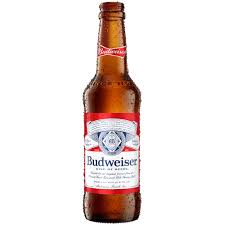
But let’s give you rough estimates for a standard drink (1.5 oz spirits, 12 oz beer at 5% ABV, or 5 oz wine at 12% ABV).
| Body Weight | Approx. drinks to reach 0.08% (over 2 hours) |
|---|---|
| 100 lbs | 2 drinks |
| 140 lbs | 3 drinks |
| 180 lbs | 4 drinks |
| 220 lbs | 5 drinks |
| 260 lbs | 6 drinks |
Real-world warning: These are averages. A 180-lb man who drinks 4 beers in 1 hour on an empty stomach could hit 0.10% – well over the limit.
Example Case That Happens Every Weekend
“Sarah weighs 140 lbs. She has two glasses of wine at a wedding (each 6 oz, not 5 oz – common pour). She drinks them in 90 minutes, didn’t eat much lunch, and feels “buzzed but fine.” She drives home. An officer pulls her over for swerving slightly. Her BAC: 0.09%. She gets a DUI.”
Why? Because restaurant pours are often larger than “standard” drinks. Two real glasses of wine can equal 2.5 standard drinks.
Why 0.08%? The Science Behind the Law
In the 1980s and 90s, most states had limits of 0.10% or even 0.15%. But decades of research showed that driving skills start to decline at 0.02% , and crash risk doubles around 0.05%.
At 0.08%:
- Your ability to track moving objects (like a child running into the street) drops by 30%
- Peripheral vision narrows (you won’t see that car coming from the side)
- Reaction time slows by 120 milliseconds – enough to add 11 feet of braking distance at 60 mph
In 2000, Congress pressured all states to adopt 0.08% or lose federal highway funding. Today, it’s the national standard.
But remember: you can still be convicted of DUI below 0.08% under “impairment to the slightest degree” laws. If you fail field sobriety tests (walk-and-turn, one-leg stand), you’re going to jail regardless of your BAC.
State Variations: Small Differences That Matter
While 0.08% is the baseline, states tweak the law in three important ways:
1. Enhanced Penalties for High BAC (“Aggravated DUI”)
About half the states have stricter punishments if your BAC is 0.15% or higher.
- More jail time (mandatory days vs. optional)
- Higher fines ($2,000+ vs. $500)
- Ignition interlock devices required for longer periods
2. “Not a Drop” for Under 21
- In Utah, anyone under 21 is at 0.00% – zero tolerance, no exceptions.
- In Texas, under 21 is at 0.00% or any detectable amount.
- In Wisconsin, under 21 is 0.02% (slightly more forgiving, but still strict).
3. Utah’s Unique 0.05% Limit
Utah lowered its standard limit to 0.05% BAC in 2018.
- That’s roughly 1–2 drinks for most people.
- Studies showed a 19% drop in alcohol-related crash deaths after the change.
- No other state has followed… yet. Advocates are watching Utah closely.
So if you’re asking “whats the legal limit of alcohol” while planning a road trip through Salt Lake City, the answer is 0.05% – not 0.08%.
Can You Get a DUI Under 0.08%? Absolutely.
This is the part that surprises most people. Police don’t need a breathalyzer to arrest you. They need probable cause – like swerving, speeding, or red eyes. Then they administer field sobriety tests.
If you fail those tests (even at 0.04% or 0.06%), you can be charged with:
- DUI-Impairment (your driving was unsafe)
- DUI-Per Se (your BAC was over the limit – only applies at 0.08%+)
In 2022, about 15% of DUI convictions in the US were for drivers with BACs between 0.05% and 0.07%.
Real-Life Scenario
“Mike has two beers with dinner. His BAC is 0.06%. He feels sober. But he’s driving 10 mph under the limit, hugging the right lane. An officer sees erratic driving. Mike fails the ‘follow my pen’ eye test. He spends the night in jail and hires a $5,000 lawyer. He pleads down to reckless driving, but his license is still suspended for 30 days.”
The lesson? Don’t rely on the number. If you’ve had any alcohol, your driving can be impaired – and you can be arrested.
How to Estimate Your BAC (And Stay Safe)
You can’t reliably guess your BAC. But you can follow this simple decision tree:
- One drink per hour maximum – Your liver processes about one standard drink per hour. Stick to that and you’ll likely stay under 0.04%.
- Add food – A full stomach slows absorption by 30–50%.
- Use a personal breathalyzer – $40–$100 devices aren’t perfect, but they’re better than guessing. Professional-grade units (like BACtrack) are surprisingly accurate.
- The “one-hour rule” – For every standard drink, wait one hour before driving. Had 3 drinks? Wait 3 hours from your last sip.
Example Timeline:
- 7:00 PM – Finish 2nd beer
- 8:00 PM – Finish 3rd beer
- Your BAC peak occurs around 8:30 PM (potentially 0.08–0.10%)
- Safe to drive? Not until roughly 11:30 PM – 3 hours after your last drink.
The Hidden Costs of a DUI (Even at 0.08%)
Many people ask “whats the legal limit of alcohol” thinking it’s just about avoiding jail. But the financial hit is often worse:
- Fine: $500–$2,000
- License reinstatement fee: $100–$500
- DUI school: $300–$800
- Ignition interlock device: $75–$150/month for 6–12 months
- Insurance increase: Average 300% for 3–5 years ($3,000+ extra per year)
- Lawyer: $2,500–$10,000
- Towing & impound fees: $200–$500
Total: $6,000 to $20,000+ for a first-time, no-accident DUI.
And that’s before lost wages if you can’t drive to work.
5 Practical Tips to Never Worry About the Limit Again
- Use a designated driver – Old school, but it works perfectly.
- Rideshare apps – A $25 Uber is cheaper than a $10,000 DUI.
- Host with “take-home” options – Keep empty to-go cups for leftovers so guests can crash on your couch.
- Test your BAC at home – Buy a personal breathalyzer and learn how different drinks affect you.
- Wait longer than you think – Most people underestimate their BAC by 0.02–0.04%. Add an extra hour of waiting, just to be safe.
FAQ: What People Really Ask About the Legal Limit
Q1: Can I drive after one beer?
A: Possibly, but it depends. A 200-lb male after one beer over one hour will likely be at 0.02–0.03% – well under 0.08%. A 120-lb female after a strong IPA (7% ABV) on an empty stomach could hit 0.05–0.06%. While not illegal, you could still be pulled over for impairment. Best practice: Wait 45 minutes to an hour per drink.
Q2: What’s the legal limit for alcohol in Canada vs. the US?
A: In the US (except Utah), it’s 0.08%. In Canada, it’s also 0.08% for criminal charges. But Canada has “warning range” penalties at 0.05–0.08%: 3-day license suspension, fine, and possible impound. Non-citizens caught at 0.05%+ can be denied entry to Canada for years.
Q3: Does mouthwash or cough syrup affect my BAC?
A: Yes, but not for long. Alcohol-based mouthwash can spike a breathalyzer for 5–15 minutes. Officers wait 15 minutes before testing to avoid “mouth alcohol.” Cough syrup (25% alcohol) could register if you take it right before driving. Always wait 20 minutes after using any oral product before breathing into a tester.
Q4: Can I refuse a breathalyzer test?
A: You can refuse, but there are consequences. Under “implied consent” laws in every US state, getting a driver’s license means you automatically agree to BAC tests. Refusing means:
- Automatic license suspension (6 months to 1 year)
- Higher fines (often $500–$1,000)
- In some states, the refusal itself is a separate crime.
If you refuse and are later convicted, penalties are often worse than if you’d just blown 0.09%.
Q5: What’s the legal limit for alcohol on private property (like a farm or private road)?
A: In most states, private property is not exempt. You can get a DUI on your own driveway, a parking lot, or a farm road if it’s accessible to the public. The only safe exception: completely fenced, locked private land with no public access. Even then, some states (e.g., Florida) still enforce DUIs on private property.
Q6: How long until my BAC goes to zero?
A: Your liver processes alcohol at ~0.015% per hour. If you’re at 0.08%, it takes roughly 5.3 hours to reach zero. If you’re at 0.12%, about 8 hours. Coffee, cold showers, and fresh air do nothing – only time works.
Strong Conclusion: Know the Number, But Drive Smarter
So, what’s the legal limit of alcohol? For nearly all adult drivers in the US, it’s 0.08% BAC. But that single number doesn’t tell the whole story. It’s lower for commercial drivers (0.04%), nearly zero for anyone under 21, and 0.05% if you’re driving through Utah.
More importantly, the legal limit isn’t a “safe zone.” Your driving can be impaired at 0.04%, and police can arrest you for DUI at 0.06% if you show signs of being drunk. The only way to guarantee a safe drive home – legally and physically – is to have zero alcohol before getting behind the wheel.
Use rideshares, designated drivers, or simply wait longer than you think you need. One bad decision at 0.08% can cost you $20,000, your license, and even your freedom. Respect the limit, but respect your life even more.
Final tip: Next time someone asks you “whats the legal limit of alcohol,” you’ll answer with confidence: 0.08% – but that’s not the whole answer. Then hand them your phone with this article open.



Leave a Reply